
M11, The Wild Duck Cluster
 Click image for full size version
September 8, 2020
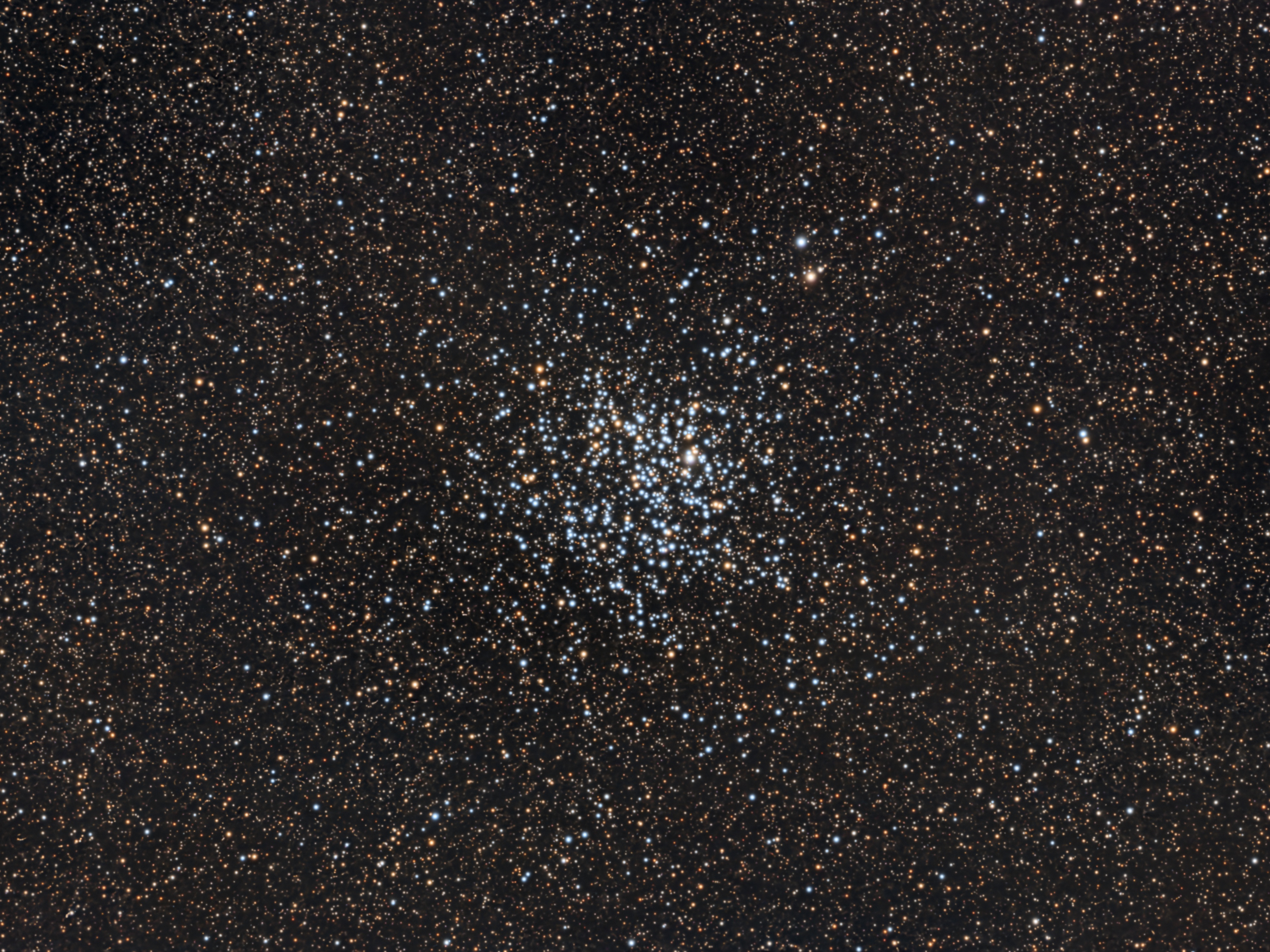
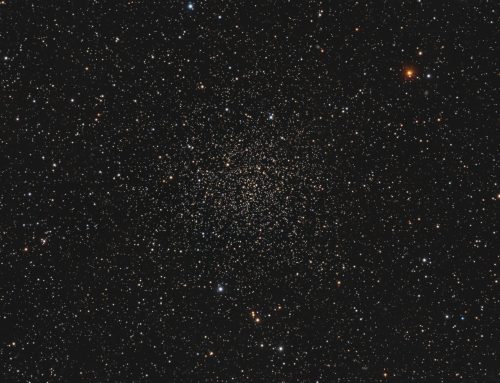
This image shows open cluster Messier 11 (M11) set in the rich summer Milky Way. I’ve shot this many times before, but never with such a llong focal length. There are so many stars! This shot really makes you think about the scale of the universe: it shows an area smaller than the size of the Moon. If you have binoculars, use them on M11: It makes a very fine sight at 7x or 10x, although the colours are very muted compared to this image.
The ‘Wild Duck’ nickname of this cluster probably came from Admiral Smyth who observed it in the 19th century and apparently thought the distinctive wedge-shape group of stars that’s prominent in a small scope resembled a V-shaped flock of wild ducks in flight. Smyth didn’t discover it though. Credit is usually given to Gottfried Kirch, who is believed to have discovered it in 1681. M11 contains thousands of stars (rich for an open cluster) and is a little more than 5,000 light years away, so its light takes that long to reach us. It is estimated to be more than 200 million years old.
Tekkies:
Acquisition, focusing, and control of Paramount MX mount with N.I.N.A., TheSkyX. Primalucelab low-profile 2″ Essato focuser, ARCO rotator and Giotto flat panel. No guiding. Equipment control with PrimaLuce Labs Eagle 4 Pro computer. All pre-processing and processing in PixInsight. Acquired from my SkyShed in Guelph. Average transparency and above average seeing. Acquired under moderate moon illumination from May 28, 2026.
Celestron 14″ EDGE HD telescope at f/11 (3,931 mm focal length) and QHY600M-SBFL camera binned 2×2 with Optolong filters.
50 x 1m Red = 0hr 50m
50 x 1m Green = 0hr 50m
45 x 1m Blue = 0hr45m
Total: 2hr 25m
 .
. Preprocessing: The WeightedBatchPreProcessing script was used to perform calibration, cosmetic correction, weighting, registration, integration, and Drizzle integration (1x; drop shrink = 0.9).
RGB master: A master RGB image was made from the Red, Green and Blue Drizzled masters using ChannelCombination in RGB mode.
Gradient Removal: DynamicBackgroundExtraction was applied.
Colour Calibration: BlurXterminator was applied to the RGB master with Correct Only selected, followed by SpectrophotometricColorCalibration.
Deconvolution: BlurXterminator was applied to the RGB master with Automatic psf, star sharpening set to 0.5, and non-stellar set to 0.9.
Stretching: MultiscaleAdaptiveStretch was applied to make a pleasing image. Approximate background level after stretch was 0.1.
Nonlinear Processing
Nonlinear Noise Reduction: NoiseXterminator was applied with Amount=0.9 and Iterations=4.
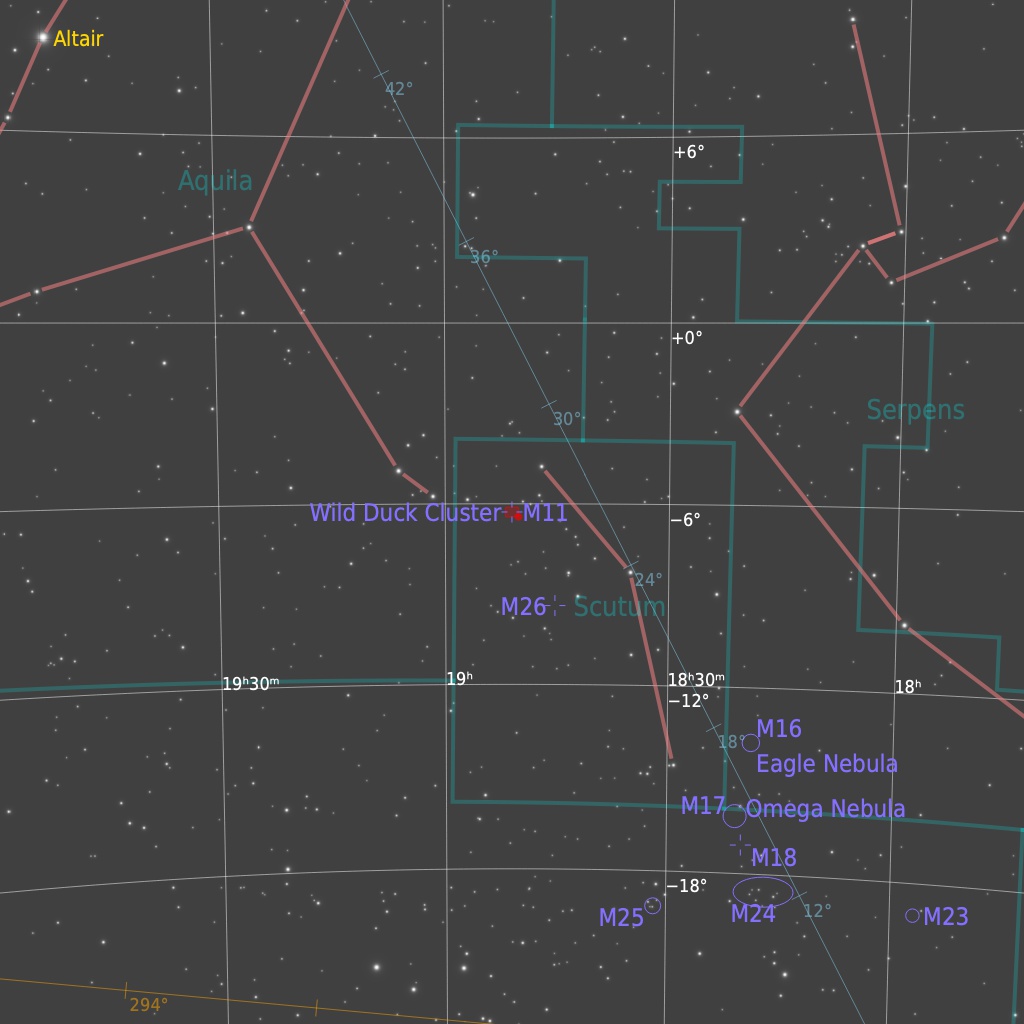
Final Steps: Brightness, contrast, and saturation were adjusted in several iterations using HistogramTransformation and CurvesTransformation with masks as required. ICCProfileTransformation (sRGB IEC61966-2.1; Relative Colorimetric with black point compensation) was applied prior to saving as a jpg. The finder chart was made using the FindingChart process.

Leave A Comment